
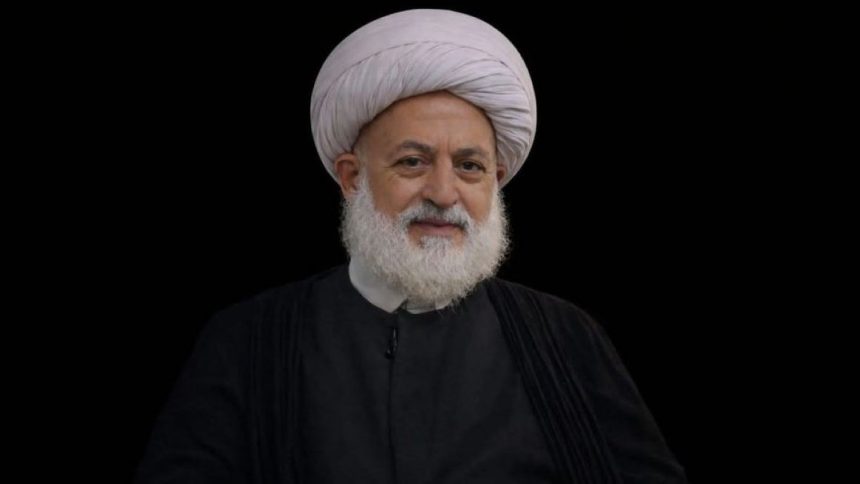
LATAKIA, Syria — In an interview with the Society for Threatened Peoples (Gesellschaft für bedrohte Volker), Sheikh Ghazal Ghazal, president of the Supreme Alawite Islamic Council in Syria and the diaspora, said Alawites are an integral component of the Syrian people and that Syria’s future cannot be understood without addressing their conditions and political positions. He thanked the organization for giving him the opportunity to convey the voice of his community amid what he described as a deliberate media blackout.
Asked why the Syrian government has targeted him, Ghazal said the government and its supporters are driven by an ideology rooted in violence and exclusion, adding that repression does not require pretexts because it is intrinsic to their approach. He said he took a firm stand against the authorities after what he described as massacres against Alawites on 7 March, involving killings, abductions, and enslavement on sectarian grounds, which he said amounted to an attempted campaign of ethnic cleansing.
He added:
“It was my responsibility to defend the lives and dignity of Alawites and to demand their protection and the lifting of injustice against them through political federalism within a secular, democratic system, one in which minorities enjoy equal status in the state and society.”
Ghazal said the regime poses a constant threat to all components of Syrian society, accusing it of seeking to eliminate those who oppose it rather than merely issuing threats. He alleged that it has carried out massacres against the Alawite community, including women and children, committed abductions and sexual violence, and detained thousands of civilians and soldiers whose fate remains unknown, adding that religious sites have been desecrated, symbols insulted, and lands burned, with similar abuses extending to Druze, Kurdish, and Christian communities.
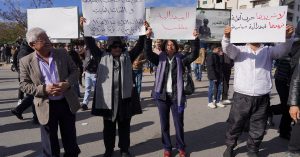
Sheikh Ghazal Ghazal emphasized the Alawite community’s inherent right to self-determination, highlighting their active participation in peaceful demonstrations against government actions. These protests were a means for the Alawites to convey the extent of their suffering, particularly after being deprived of essential resources and basic means of survival.
Addressing the grave issue of casualties, Ghazal noted that estimates of Alawites killed or disappeared range from 30,000 to 60,000. He stressed that these figures are only approximate and continue to rise, making it impossible to ascertain precise numbers as violations persist unchecked.
Ghazal also confirmed ongoing direct communication with leaders from other minority communities, specifically mentioning his contacts with the Druze leadership, including Druze Spiritual Leader Sheikh Hikmat al-Hijri, and with influential Kurdish leaders. His commitment to inter-community engagement was further demonstrated by his participation in the First National Dialogue Conference held in Hasakah, northeastern Syria, as well as the organization of a delegation representing Syrian communities for diplomatic discussions in Geneva with international stakeholders.
These collective efforts led to a significant consensus: the future Syrian state must be founded on political and democratic decentralization. This structural approach is essential to create a system that unequivocally rejects exclusion and marginalization, ensuring more inclusive governance for all Syrian communities.
He added:
“After the devastating war and the tearing of Syria’s social fabric, the country cannot remain unified unless it adopts a decentralized federal political system through a political process involving all Syrians to reach consensus on a constitution that enshrines this form of governance. A secular democratic system is also necessary.”
Ghazal said he has consistently advocated for a pluralistic, secular civil state based on law and citizenship, arguing that separating religion from politics serves both society and the state while also safeguarding religion from polarization and manipulation.
On women’s rights, he said, “It is essential to establish a system that guarantees genuine and effective participation for women, whether through fair representation in all state institutions or through a co-presidency system.”
Ghazal accused Turkey of supporting extremist factions in the belief that doing so would shift the balance of power in Syria in line with its regional ambitions, linked to what he described as the so-called New Middle East project. He argued that the best course for Alawites and democratic Kurds in Turkey, as well as for the Turkish government, is to engage in political negotiations to ensure genuine participation and constitutional guarantees of rights, thereby promoting security and stability in both countries.
Ghazal warned that continued support for extremist factions in Syria would have negative repercussions for internal conditions in both Syria and Turkey.
On regional and international support for Alawites, he said:
“Alawites are one of the main pillars of stability. What is needed is to achieve political balances at the domestic, regional, and international levels. These balances form the foundation for building peace and strengthening political and economic cooperation with all countries concerned with Syria, particularly in areas where Alawites live.”
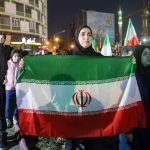
He added that Iran has no influence over Alawite realities, stressing that Alawites do not wish to be drawn into regional conflicts.
The interview concluded with Ghazal warning that violations against Alawites, including killing, enslavement, abduction, looting, and arson, continue amid what he described as a deliberate and systematic media blackout. He cautioned that if the situation persists, it could lead to a civil conflict extending across the entire country.
BAGHDAD — Rana Georges, an Iraqi Chaldean–Syriac–Assyrian woman, remains in detention three days after security forces arrested her in …
[email protected]
[email protected]
Alawite religious leader Ghazal Ghazal warns of sectarian violence, calls for a secular and federal Syria – SyriacPress



Leave a Comment